
What Is Umbilical Cord Allograft Therapy for Hair Loss?
This page discusses scalp injections involving donor-derived umbilical preparations, sometimes combined with PRP. Product composition, viable cell content, and processing vary. Dr. Ben Behnam performs the practice’s stem-cell procedures. Discuss the exact proposed preparation, individual suitability, and alternatives before deciding. No stem-cell injection is FDA-approved for hair regrowth. Laboratory registration or testing does not establish approval of the product for that use.
Umbilical cord blood, cord tissue, and other donor-derived products differ. A manufacturer’s description of “minimal manipulation” or “homologous use” does not establish that a scalp injection meets regulatory requirements. Request the exact product name, intended use, and supporting documentation.
How Are Stem Cell Treatments Different From PRP (Platelet Rich Plasma) Treatments?
PRP is a platelet concentrate prepared from your own blood. It is not a stem-cell treatment. Donor-derived tissue products and autologous cell preparations have different composition and evidence; a younger donor source alone does not prove better hair growth.
Do You Have Any Video Testimonials?
The existing videos describe individual experiences. They do not establish typical outcomes or replace controlled clinical studies.
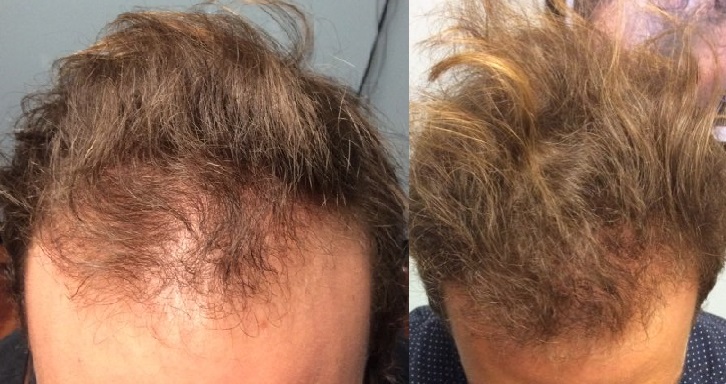
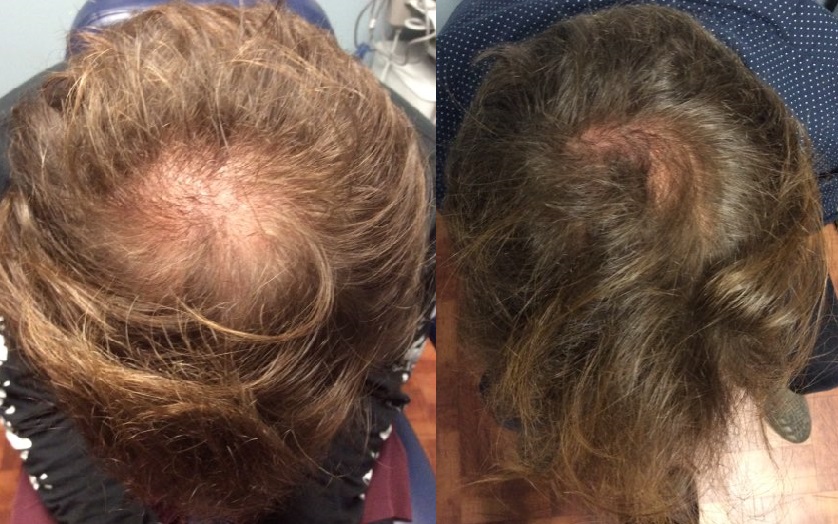
Do You Have Any Before and After Photos?

Does PRP contain stem cells?
PRP is prepared to concentrate platelets; it should not be described as a purified stem-cell preparation. Results from PRP cannot be assumed to apply to an umbilical product or vice versa.
How is the Process of Stem Cell Injections Performed?
- Discuss whether PRP is part of the proposed plan and how it will be prepared.
- While the PRP is performed, the scalp is cleansed and numbed.
- Request the exact product, manufacturer, and storage and handling documentation.
- Ask about the proposed combination and dose.
- Review the planned treatment area and injection method.
- Discuss whether microneedling is proposed and its separate risks and aftercare.
Can a dermaroller be combined with scalp injections?
Microneedling is a separate intervention. Ask what evidence supports combining it with the proposed preparation, and obtain individualized instructions rather than adding home treatment yourself.
How long do you wait between the time Stem Cells are mixed with PRP to inject in the scalp?
Preparation and administration should follow the product-specific protocol and appropriate clinical handling. Ask the clinician to explain the procedure being proposed.
Can I inject eyebrows with Stem Cell?
Eyebrow treatment requires separate assessment and discussion of the limited evidence. See the eyebrow information page.
Are there clinical studies showing the efficacy of Stem Cells for hair loss?
Published studies of cellular and cell-derived approaches to hair growth exist, including those summarized in a 2024 systematic review. The studies use different preparations; a study of autologous cells does not establish the benefit of a donor-derived product.
What is the difference between Stem Cells from bone marrow, adipose tissue, and umbilical cord blood?
Bone marrow, fat, and cord-derived preparations differ in cell populations and processing. Laboratory comparisons do not establish which commercial product is most effective or safe for scalp injections.
Can’t I use my own stem cells derived from my own fat cells to be injected into my scalp?
Autologous fat-derived approaches have been studied, but study methods differ. Their results do not establish a standard scalp procedure or validate every marketed product.
- Fat collection involves a separate procedure and its own risks.
- Age and laboratory cell behavior do not by themselves establish comparative clinical benefit.
Can Stem cells be obtained from a blood draw, like PRP?
A routine blood draw for PRP does not produce a purified stem-cell therapy. Specialized blood stem-cell collection for transplantation is a different medical process.
What is the array of anti-inflammatory proteins and cytokines that are released that help with hair loss?
Researchers study many signaling molecules involved in inflammation and tissue responses. Naming cytokines does not establish that a product produces meaningful hair regrowth.
How are the Stem Cells processed, and are they safe to use?
Request donor-screening, batch-testing, preparation, and storage documentation for the exact product. Do not assume a generic manufacturing description applies to it. Risks vary with the product and procedure and can include pain, bruising, swelling, infection, contamination, or immune reactions. Donor screening and sterility testing do not eliminate these risks.
Are Stem Cells tested for HIV, Hepatitis and other infectious diseases?
Ask for the exact donor-screening and infectious-disease testing documentation. Testing reduces some risks but does not guarantee sterility, safety, or effectiveness.
How many cells are in each vial of Stem Cells?
The treatment area, preparation, dose, and follow-up should be discussed for your individual case. A cell-count claim alone does not establish a viable stem-cell dose or better results.
What is different about Umbilical Cord Stem Cells compared to Stem Cells derived from fat?
Laboratory growth rates and cell aging do not establish that one preparation produces better scalp outcomes. Clinical comparisons must test the exact interventions in patients.
Can I have a Graft vs Host Response after the injection?
Donor-derived preparations can cause inflammatory or immune reactions. Graft-versus-host disease is a specific complication associated with donor immune cells; it should not be reduced to a blood-type comparison. Discuss the exact product’s risks rather than assuming immune protection.
Do They Ever Use an Aborted Fetus To Harvest Stem Cells?
Request the source and donor-consent documentation for the exact preparation. Umbilical tissues and embryonic sources are different categories.
Do Stem Cells Duplicate Themselves in the Body?
Stem-cell survival, proliferation, and behavior depend on the cell type and treatment context. It is inaccurate to claim that stem cells can never divide inside the body.
How long do the Stem Cells last in your body?
There is no established universal survival period for cells after scalp injection. Do not equate a claimed cell lifespan with a reliable duration of hair growth.
Are the Umbilical Cord Stem Cells From Another (Allogeneic) Safe to be Injected Into Me?
Risks vary with the product and procedure and can include pain, bruising, swelling, infection, contamination, or immune reactions. Donor screening and sterility testing do not eliminate these risks.
Theoretical immune-modulating properties do not guarantee that a donor-derived scalp preparation is immune privileged or safe for every patient.
Can the Patient Take NSAIDS?
Obtain individualized medication instructions from your treating clinician. Do not stop aspirin, prescribed medicines, or NSAIDs based on this page alone.
Are There Growth Factors More Concentrated in PRP Than in Umbilical Cord Cells?
Growth-factor concentrations and release patterns vary by preparation. Laboratory measurements do not establish superior or longer-lasting hair outcomes.
What medical history should be reviewed before treatment?
- Transplant history, immune conditions, and immunosuppressive medicines.
- Current medicines and conditions affecting healing or infection risk.
- Active illness or infection.
- Pregnancy, breastfeeding, or plans for pregnancy.
What other factors require individualized assessment?
- Cancer history and current treatment.
- Allergies and previous injection reactions; do not self-premedicate.
- Sensitivity to product ingredients or preservatives.
- Age and the evidence for the proposed indication.
Is Stem Cell injections a cure for hair loss?
No.
Are Stem cells used for other conditions?
Established stem-cell transplantation and investigational joint injections are different interventions. Read the broader procedure overview for their uses and limitations.
What preparation do I need for the day of the procedure?
Obtain a written preparation plan tailored to your medical history.
- Ask about hydration or fasting requirements for the exact procedure.
- Bring your medicine list and prior treatment history.
- Obtain individualized medication instructions from your treating clinician. Do not stop aspirin, prescribed medicines, or NSAIDs based on this page alone.
What are the restrictions after the procedure?
Follow your written aftercare plan for washing, hats, exercise, swimming, travel, and topical products. Timing depends on the procedure and your recovery; contact the office if symptoms worsen. Obtain individualized medication instructions from your treating clinician. Do not stop aspirin, prescribed medicines, or NSAIDs based on this page alone.
Can I combine Stem Cell therapy with other hair loss modalities?
Discuss medicines and any combined regimen with the clinician. Do not start, stop, or combine treatments solely on the basis of this page.
How long do I have to wait before another session of Stem Cell for hair loss?
The decision to repeat a procedure should follow assessment of outcomes, adverse effects, and alternatives. Request evidence for the proposed interval.
Do Stem Cells Cause Cancer or Cause Cancer to Grow?
Stem-cell transplantation used in cancer care does not establish that a scalp injection prevents cancer or cannot promote unwanted tissue growth. Product-specific long-term safety matters; disclose any cancer history.
Can stem cells be used for Alopecia Areata?
Early studies in alopecia areata do not establish an approved or standard stem-cell treatment. The diagnosis and established alternatives should be reviewed with a dermatologist.
Patient images and videos describe individual experiences. They do not establish typical outcomes or replace an individual medical evaluation.
No stem-cell injection is FDA-approved for hair regrowth. Laboratory registration or testing does not establish approval of the product for that use. General research findings do not establish the safety or effectiveness of the exact preparation proposed for you.
For regulatory information, review the FDA consumer guidance and the product’s current approval information. A manufacturer’s compliance statement is not a substitute for product-specific verification.
For product documentation and current consultation or treatment fees, contact the office or call (310) 315-4989.
Updated November 4, 2026. For broader treatment options, evidence, and FDA information, read our Los Angeles stem-cell therapy guide. Consultation and treatment fees: contact the office or call (310) 315-4989.